

An autistic Barbie is not the measure of progress for autistic Australians
By Nicole Rogerson, CEO and founder of Autism Awareness Australia.
I probably need to go on the record and say that 1980s Nicole was a devoted Barbie fan. The Christmas I received Peaches n' Cream Barbie AND the Barbie Corvette still ranks as one of the great moments of my childhood. Barbie mattered to me.
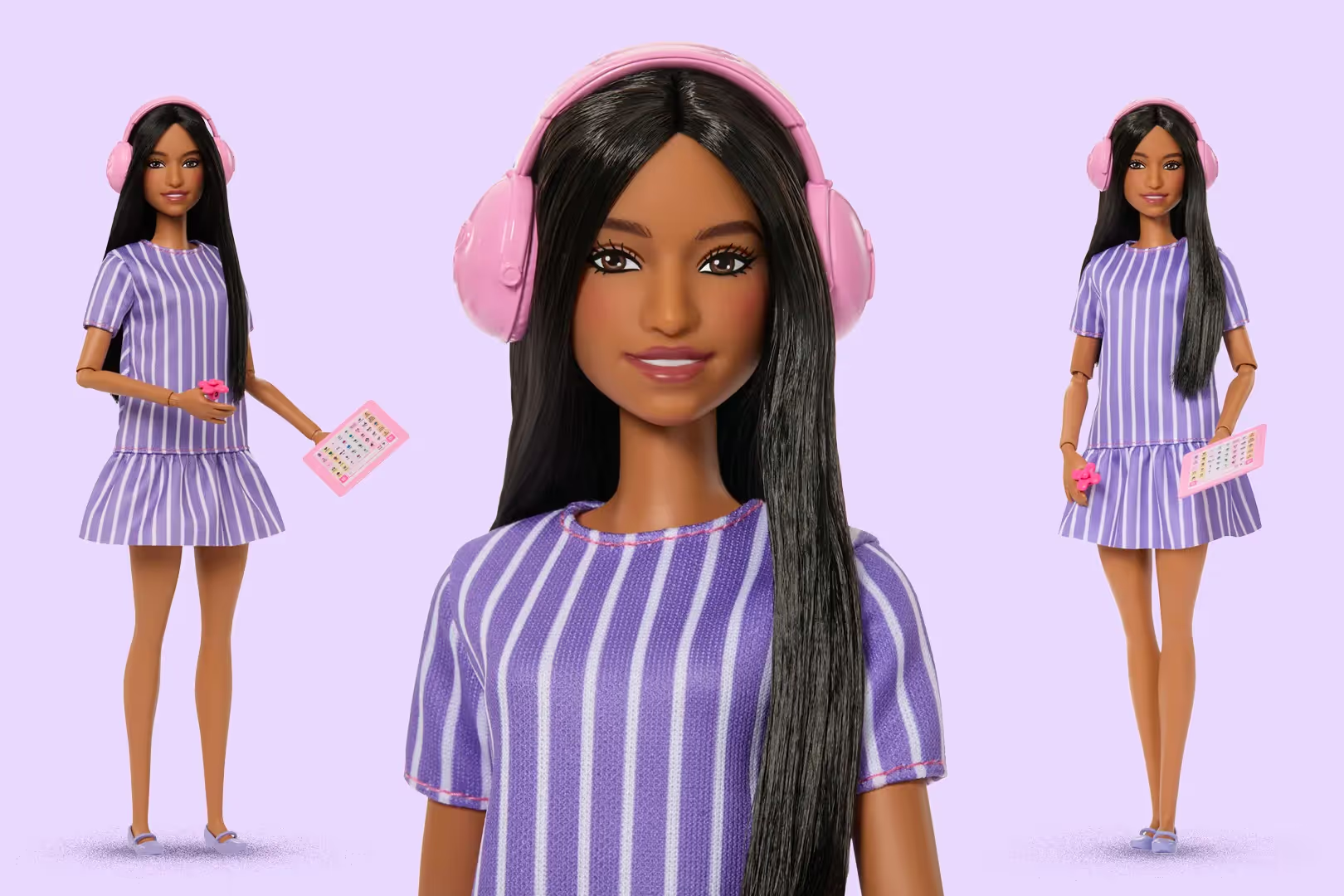
So when Mattel releases an autistic Barbie, I understand why many autistic people and families feel genuinely pleased. Being seen in mainstream culture matters. Representation can be powerful, particularly for children who rarely see themselves reflected in positive ways. For some autistic people, especially those who experience their autism as a strength or a core part of their identity, this will feel affirming and welcome. And that response is entirely valid.
Mattel is also not the first organisation to attempt this. In 2017 Sesame Street debuted their autistic character, Julia. In 2018, Lottie Dolls released Hayden, an autistic astronaut. In 2022, Thomas and Friends introduced, Bruno the Brake Car, and in 2024, Lego debuted their hidden disabilities mini figures. For many autistic people and autism families, that kind of thoughtful, visible inclusion has helped build understanding and reduce stigma. In that sense, an autistic Barbie will undoubtedly be received as a positive step by a portion of the community. It will spark conversations, prompt curiosity, and for some children, offer a sense of recognition that has been missing.
But it is also true that there will be many families quietly rolling their eyes. Not out of malice or cynicism, but out of fatigue. For families supporting autistic children with more significant disability, or navigating systems that feel relentlessly hard, a doll can feel peripheral. This is not a rejection of representation. It is a recognition of proportion.
Right now in Australia, autism is being pulled into public debate in ways that carry real consequences. We are in the middle of the most significant structural changes affecting autistic children since the introduction of the NDIS in 2014. The redesign of the scheme and the proposed shift of many autistic children into the new foundational support program, Thriving Kids, will fundamentally change how support is accessed and delivered. For families with young children, this is not an abstract policy. It will shape daily life.
At the same time, autism continues to be surrounded by a global ecosystem of misinformation and disinformation. Families are trying to make decisions in an environment that is often noisy, confusing, and emotionally charged. Against that backdrop, it is understandable that some people view the public attention given to an autistic Barbie as trivial when compared to the challenges they are facing.
The bigger question we should be asking is not whether a doll is good or bad. It is whether life is actually getting better for autistic Australians.
For a significant group of autistic people, particularly those with higher support needs, the answer is far from clear. We know that too many families still face long delays to diagnosis. Access to good-quality early intervention remains uneven and, in many cases, unaffordable. Our school system continues to do a poor to middling job of genuinely including autistic students, understanding how they learn, and making appropriate adjustments. Too often, families are left to fight battles they should not have to fight.
As autistic children grow into adults, the picture does not improve. Australia’s disability employment services system is failing to deliver meaningful work outcomes for autistic people. Unemployment and underemployment rates remain unacceptably high, despite autistic people having skills, strengths, and a strong desire to contribute. These are not marginal issues. They go to dignity, independence, and quality of life.
This is why it matters that we keep our eye on the prize. While representation can be meaningful, it should not be mistaken for progress on the complex structural issues that determine whether autistic Australians are actually supported to live good lives.
We now have a National Autism Strategy in Australia. That is not nothing. It represents an opportunity to focus on outcomes rather than symbolism, on systems rather than gestures. The real work ahead is making sure it is implemented in a way that delivers practical, measurable improvements for autistic Australians across the lifespan.
So by all means, let people enjoy the autistic Barbie if it resonates with them. There is room for that. But let us not allow ourselves to be distracted by it. The measure of progress is not whether autism appears on a toy shelf. It is whether autistic Australians can access timely diagnosis, effective support, inclusive education, meaningful employment, and a support system that actually works.
Twelve years after the NDIS began, the jury is still very much out on whether life is better for autistic Australians. That is where our attention needs to stay.