


Support for daily living skills
Support for daily living skills
Developing daily living skills and engaging actively in the community is important for everyone, including autistic adults.
While daily living skills may come naturally to some, others may need structured support to develop and maintain these skills. Below we explore various support systems available to autistic adults and their parents or carers, focusing on practical skills such as money management, household chores, and participation in social and community activities.
On this page
- Money management and banking skills
- Cooking, nutrition and meal preparation
- Social and community participation
- Personal care and hygiene routines
- Managing household chores and home maintenance
- Using technology to build independence
- Transport, travel and mobility skills
- FAQs on daily skills for autistic adults
Banking and financial management
Managing finances is an important daily living skill that contributes to independence. Here are some strategies to assist autistic adults in developing financial management skills:
- Teach budgeting: Creating a budget helps individuals understand income, expenses, and savings. Teaching budgeting skills can involve using visual aids, such as charts or apps, to track spending.
- Use examples: Applying financial concepts to real-life situations, such as shopping or paying bills, provides practical experience and reinforces learning.
- Simplify banking: Using simple banking tools, such as basic accounts and debit cards, can make financial management more accessible. Online banking apps with clear and simple interfaces can also be helpful.
- Practice money handling: Counting cash and role-playing giving change helps build confidence and competence in financial transactions.
- Provide guidance on saving: Teaching the importance of saving and setting savings goals can promote financial stability. Encourage the use of savings accounts and automatic savings plans.
- Financial management: Financial management is an important skill. Learning or teaching how to use online banking services involves showing how to check balances, transfer money, and pay bills. Screen-sharing tools or video tutorials can provide step-by-step guidance.
Budgeting and expense tracking are also crucial skills. Simple budgeting tools like apps or spreadsheets can help manage income and expenses. Regular sessions to review budgets and expenses can identify patterns and adjust plans as needed. The Australian Government’s MoneySmart website provides practical guidance on budgeting and saving.
Practising transactions such as depositing money or using an ATM can build confidence in autistic adults. It's also important to educate on identifying and avoiding financial scams, providing examples and tips for protecting personal information.
Cooking and meal preparation
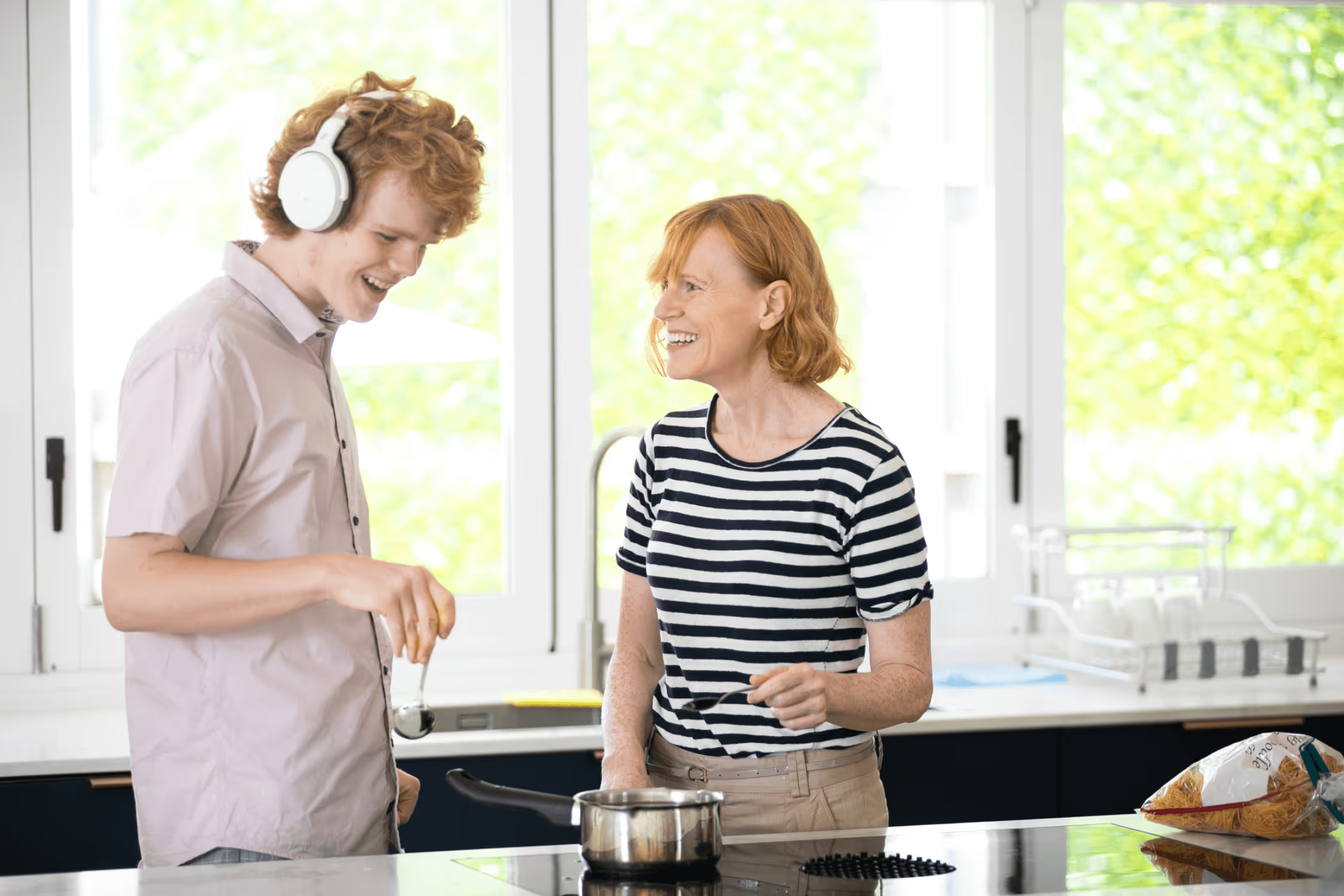
Understanding nutrition and cooking is an important skill for maintaining a healthy lifestyle. Starting with basic recipes that require minimal ingredients and steps can gradually build confidence in the kitchen. Visual recipes, which include pictures for each step, can be particularly useful. Websites like Cooking with Autism offer examples of visual guides.
Kitchen safety is another important skill to understand. Teaching kitchen safety rules, such as handling knives and operating appliances, helps to create a safe cooking environment. Using safety checklists and visual reminders can also help reinforce these rules.
Meal planning and grocery shopping are important parts of cooking. Using meal planning apps or printable planners can help organise weekly meals, simplify grocery shopping, and reduce food waste. Practising making shopping lists and navigating grocery stores can also be beneficial. Ordering groceries online can help reduce any stress autistics may feel when shopping.
Cooking classes designed for autistic individuals can provide structured learning and social interaction. Joining cooking groups where members share recipes and cook together can further enhance these skills and provide a sense of community.
If meal preparation and cooking are challenging, there are some great nutritional ready-made meals you can order online as you work your way towards cooking independently.
Social and community participation
Building social skills and participating in community activities are important for personal growth and wellbeing. Developing social skills can be supported through social stories that teach appropriate interactions and responses. These personalised narratives help explain social situations and expected behaviours. Role-playing different social scenarios helps prepare for upcoming social interactions and reduces anxiety.
Finding clubs or groups that align with your interests, such as coding clubs, book clubs or sports teams, makes socialising more enjoyable and meaningful. Participating in autism-friendly events, which often have sensory-friendly environments, can also be beneficial.
Volunteering is another excellent way to grow your social participation. Exploring volunteer opportunities that match skills and interests can provide a sense of purpose and connection to the community. Visiting community resources like libraries and community centres that offer inclusive activities can also be a great way to get involved.
Personal care and hygiene
Maintaining personal care and hygiene is important for health and self-esteem. Creating consistent daily routines for personal care activities, such as brushing teeth, bathing, and grooming, can be supported with visual schedules. Creating step-by-step guides for each task, using pictures or videos, can provide clear instructions to get through each task. When selecting hygiene products and routines, consider sensory preferences and sensitivities and introduce new routines gradually to allow time for adjustment.
Using clear and simple language to explain why personal hygiene is important for health and social reasons helps people understand. Additionally, encouraging regular medical and dental check-ups, and assisting with booking appointments and understanding the doctor’s advice, ensures that health needs are properly taken care of.
Household chores
Household chores are another essential component of daily living skills. These tasks include cleaning, cooking, laundry, and other responsibilities that contribute to maintaining a household. Here are some tips to assist autistic adults in managing household chores:
- Break down tasks: Large tasks can be overwhelming. Breaking down chores into smaller, manageable steps can make them more achievable. For example, instead of “clean the kitchen,” break it down into “wipe the counters,” “wash the dishes,” and “sweep the floor.”
- Use timers and alarms: Timers and alarms can help with time management and make sure that tasks are completed within a reasonable timeframe. This can be particularly helpful for chores that have a set duration, like cooking.
- Create a schedule: A chore schedule provides structure to ensure that all necessary tasks are covered. Depending on the individual's needs, it can be a weekly or daily schedule. Visual schedules with pictures can be especially useful.
- Offer choices: Allowing individuals to choose which chores they prefer to do can increase engagement and motivation and also create a sense of control and independence.
- Teach through practice: Hands-on practice is essential for learning household chores. Providing opportunities for the individual to practice tasks regularly helps to build competence and confidence.
- Basic home maintenance skills, like changing a light bulb or fixing a leaky tap, can be taught through hands-on practice and step-by-step guides. Keeping a list of emergency contacts and service providers for home repairs and emergencies helps so they know when and how to call for help.
Teaching how to keep track of household supplies and food items using checklists and apps can help ensure that essential items are always in stock. Providing tips for budget-friendly shopping, such as using coupons, buying in bulk, and comparing prices, can make managing the household more efficient.
Technology and daily living skills
Technology can be a valuable tool in developing and supporting daily living skills. Here are some ways technology can be used:
- Apps for daily living: There are many apps designed to support daily living skills, such as task management apps, budgeting tools, and social skills programmes. These apps can provide structured guidance and support for autistic adults.
- Online resources: Online resources, such as instructional videos and tutorials, can offer step-by-step guidance for various tasks. These resources can be accessed at any time, providing flexibility.
- Assistive technology: Communication devices or sensory tools, can support autistic individuals in their daily lives to help grow independence and improve quality of life.
- Virtual support groups: Virtual support groups can provide social interaction and community support and can be useful for individuals who might find in-person social interactions challenging.
- Smart home devices: Smart home devices, such as voice-activated assistants or automated systems, can simplify daily tasks and provide reminders. These devices can also help to support time management and task completion.
Transportation and mobility
Being able to navigate transportation options is an important skill for everyday living. Teaching how to use public transport, including reading schedules, buying tickets, and understanding routes, can be supported with visual aids and practice runs. If appropriate, providing driving lessons and support in obtaining a driving licence through structured driving programs tailored for autistic individuals can be beneficial. Teaching how to plan travel routes and understand maps using apps like Google Maps can grow and improve travel independence. Discussing travel safety tips, such as staying aware of surroundings, carrying emergency contacts, and knowing what to do if lost, helps develop safe travelling skills.
Providing guidance on navigating airports, from check-in to boarding, using visual guides and airport maps, can make air travel less stressful. Offering tips for long-distance travel, such as packing essentials, managing travel anxiety, and understanding travel documents, ensures a smooth travel experience.
Building daily living skills in areas such as banking, cooking, social participation, personal care, household management and transportation is vital for the independence and wellbeing of autistic adults. Research shows that structured life skills training — including self-management techniques — significantly improves the acquisition of daily living skills and related independence outcomes for autistic individuals.¹
By providing structured support, practical tools, and creating a supportive environment, we can empower autistic adults to lead fulfilling, autonomous and supported lives.
¹ See Meta-Analysis of Self-Management Interventions in Daily Living Skills for Autistic Individuals on Springer/Nature.
FAQs: Daily Living Skills for Autistic Adults
What are daily living skills for autistic adults?
Daily living skills include managing money, cooking, cleaning, personal hygiene, social participation, and using transport. These skills support independence and community participation.
Can the NDIS fund support for daily living skills?
Yes. The NDIS may fund Capacity Building supports such as life skills training, occupational therapy, support workers, or programs that build independence at home and in the community. Funding depends on individual goals and eligibility.
At what age should daily living skills be developed?
Daily living skills can be developed at any age. Many autistic adults build these skills later in life, especially if diagnosis or support was delayed.
What if an autistic adult struggles with independence?
Structured, step-by-step teaching, visual supports, assistive technology, and practice in real-life settings can significantly improve confidence and competence. Independence is built gradually.
Are there autism-specific programs for life skills?
Yes. Some organisations provide autism-adapted cooking classes, social groups, travel training, and life skills programs designed with sensory and communication needs in mind.
Last technically reviewed by Corey Googh on 19 February 2026